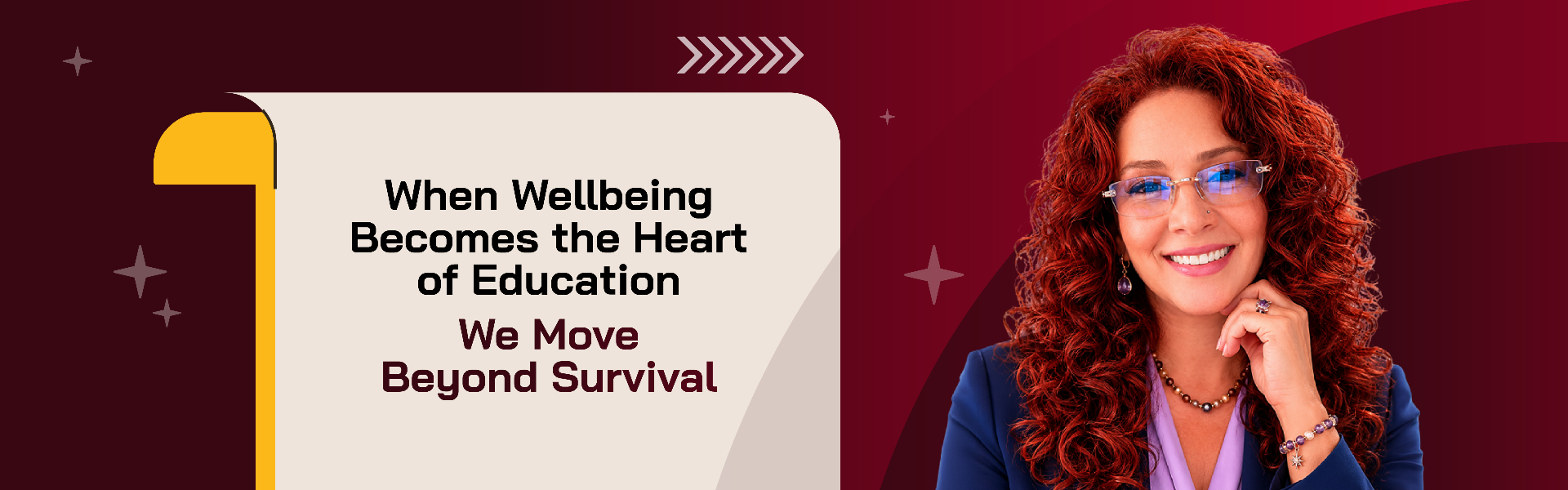
By Mylee “Star” Hawk, MAEd
When I was in high school, there was a teacher named Mrs. Sargent who changed the trajectory of my life.
Mrs. Sargent stood barely at 4'9", but she carried the energy of a giant. She possessed the rare ability to make people feel seen, heard, and valued. At a time when I was a frightened young girl carrying burdens that many people could not see, she looked beyond the surface and recognized that I was struggling.
Like so many students, I had learned to hide my pain and simply survive each day. Yet Mrs. Sargent saw through the mask. She understood that what I needed most was not another assignment, another lecture, or another expectation placed on my shoulders. I needed someone to believe in me.
She listened. She encouraged me. She created moments of safety in a world that often felt uncertain. Most importantly, she never gave up on me.
It was because of her dedication that I finished high school.
Years later, I earned degrees, worked as an educator, mentor, and advocate, and now pursue doctoral studies focused on healing, wellbeing, and human potential. Yet when I think about what truly shaped my educational journey, my thoughts always return to a woman who stood 4'9" tall and changed a life simply by caring enough to see the child standing in front of her.
Mrs. Sargent taught me something that research continues to confirm before students can thrive academically, they must first know they matter.
Today, as educators, parents, and community leaders, we are witnessing a growing mental health crisis among young people. Anxiety, depression, loneliness, trauma, and disconnection are affecting students at unprecedented levels. At the same time, educators themselves are experiencing burnout, compassion fatigue, and increasing demands on their time and energy.
Yet despite mounting evidence, educational success is still too often measured primarily through test scores, attendance rates, and academic outcomes. While these measures have value, they tell only part of the story.
Learning does not occur in isolation from wellbeing.
A child who does not feel safe cannot fully engage in learning. A student who feels invisible struggles to discover their potential. An educator who is emotionally exhausted cannot sustainably provide the support their students need.
Wellbeing is not an extra initiative to be added when resources allow. It is the foundation upon which meaningful education is built.
Throughout my career, I have worked with at-risk youth, families facing adversity, survivors of trauma, and individuals navigating significant life challenges. Across every setting, one lesson has remained constant: people flourish when they feel seen, valued, and connected.
The most transformative educational experiences are rarely defined by a worksheet, a standardized test, or a lesson plan. They are defined by relationships. They happen when a teacher takes the time to listen, when a mentor recognizes hidden potential, or when a school creates a culture of belonging.
Research consistently demonstrates what many educators already know from experience. Emotional safety supports cognitive growth. Positive relationships improve academic outcomes. Creativity, movement, social connection, and opportunities for self-expression contribute to healthier learning environments. When students experience belonging, they are more likely to engage, persist, and succeed.
But wellbeing is not solely the responsibility of students.
Educators’ wellbeing must be recognized as equally essential.
We ask teachers to be instructors, counselors, mentors, advocates, and often first responders to emotional needs. They celebrate victories, absorb heartbreaks, and carry the responsibility of helping shape future generations. Yet many educators are doing this work while facing overwhelming workloads, limited resources, and increasing levels of stress.
If we want thriving students, we must also invest in thriving educators.
This requires a shift in how we think about educational systems. Rather than viewing wellbeing as separate from academic achievement, we must recognize it as a prerequisite for learning. Schools should be places where social-emotional development, creativity, collaboration, and human connection are valued alongside academic excellence.
The future of education calls for a more holistic approach—one that nurtures the mind, body, and spirit of every learner. It calls for environments where students feel empowered to explore their strengths and where educators are supported in bringing their best selves to their work. It calls for partnerships between schools, families, and communities that recognize learning extends far beyond classroom walls.
Perhaps most importantly, it calls for a renewed understanding of belonging.
Belonging is more than inclusion. It is the experience of knowing that matters who you are. It is the confidence that your voice has value. It is the feeling of being connected to something larger than yourself.
When belonging is present, resilience grows. Hope grows. Learning grows.
As we look toward the future of education, we have an opportunity to redefine what success truly means. Success should not be measured solely by what students know, but also by who they become. It should reflect our ability to cultivate compassionate, creative, resilient human beings who are prepared not only to succeed in the world, but to contribute positively to it.
Education has the power to transform lives. I know this because it transformed mine.
Many years ago, one teacher looked beyond grades, expectations, and appearances. She saw a scared young girl who needed support, encouragement, and hope. Because she chose to care, that student found the strength to continue.
Her legacy lives on not only in my story, but in every student, educator, and community member whose life has been touched by someone willing to see the whole person behind the performance.
When wellbeing becomes the heart of education, we move beyond survival.
We create the conditions for individuals, communities, and future generations to truly thrive.
Mylee “Star” Hawk, MAEd
globalpartners@eletsonline.com
speakers@eletsonline.com

© Copyright 2026 All Rights Reserved by Elets technomedia.